What Nebraska's Disclosure Form Doesn't Ask About Northeast Lincoln's Sewer Lines
September 17, 2026
A seller in Havelock sits down with the Nebraska Real Estate Commission's disclosure form the week before listing. She checks "No" next to sewer backups. She's telling the truth. The drain has never backed up in the fourteen years she's owned the house. Three weeks later, the buyer's inspector runs a camera down the line and finds root intrusion in a joint of clay tile pipe that's been slowly failing since before she moved in.
Nothing about that seller's disclosure was dishonest. That's the part worth sitting with before you list an older home in this part of Lincoln.
Nebraska's Seller Property Condition Disclosure Statement, required under Neb. Rev. Stat. § 76-2,120, obligates every seller of a one-to-four-unit residential property to hand the buyer a written statement of the property's condition before the purchase agreement becomes binding. Nolo explains that the statute is specific about what has to be covered, including the condition of included appliances, any hazardous materials, title issues like easements and encroachments, and how utilities are connected.
If you genuinely don't know whether your sewer lateral is failing, the Nebraska Real Estate Commission's form lets you mark "Do Not Know" and remain in full compliance. The form even builds in that exact language
The statute also sets a time limit for a buyer's claim. A buyer who later finds an undisclosed material defect has one year from taking possession to sue for actual damages, court costs, and attorney's fees. And under the statute, a buyer's agent isn't required to verify anything on the form. They just have to make sure a copy changes hands before closing.
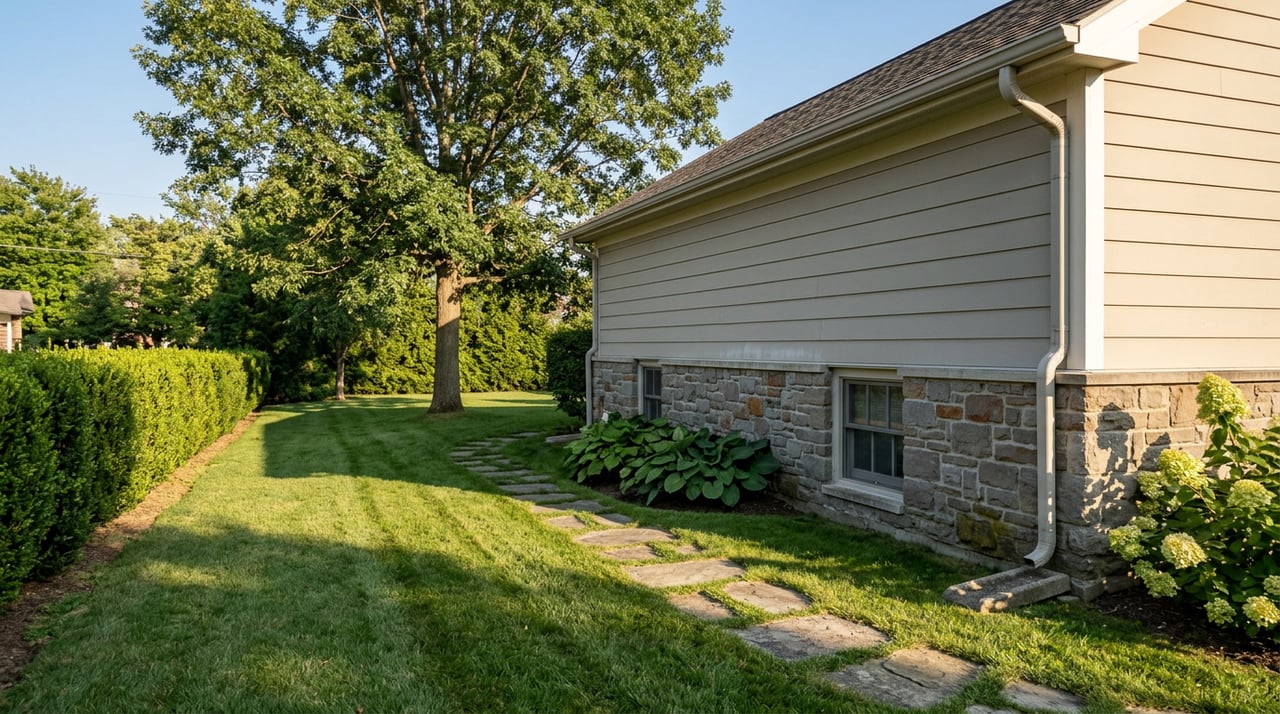
This is where Northeast Lincoln's housing stock changes the math. Local plumbers who work this part of town don't talk about sewer backups as a citywide coin flip. Select Plumbing, a Lincoln-based plumbing company, points specifically to Havelock and the Near South as areas that see more sewer backups than newer parts of the city, attributing it to decades-old clay or cast iron pipe combined with mature street trees whose roots work into cracks in the line over time. They describe it as a chronic, ongoing problem rather than something that resolves after one repair.
Roto-Rooter's Lincoln service pages tell a similar story across the city's older core, listing Havelock and Bethany alongside College View, Piedmont, University Place, and South Salt Creek as extended coverage areas where original clay tile, cast iron, or Orangeburg pipe is still common. Lincoln's clay soil compounds the issue. As that soil shifts underground, it creates the cracks that tree roots then find their way into, and hard water scale adds to the buildup inside pipes that are already decades past a comfortable service life.
These service-area descriptions offer local context, but they do not establish the condition of any particular home's sewer lateral.
Older pipes can develop problems before symptoms appear, so an inspection may provide additional information before a sale.
There's a second piece of this that surprises sellers who assume city sewer service means the city handles everything. It doesn't. According to Select Plumbing, the municipal system covers the main line running under the street, while the private lateral, the pipe running from your house to the property line, is the homeowner's financial responsibility. If a blockage or collapse happens on your side of that line, the repair bill is yours regardless of whether the home has been on public sewer for a hundred years.
That distinction matters most in the exact neighborhoods where the lateral is oldest. A camera inspection is the only way to know which side of that line a problem sits on, and by the time a buyer's inspector is running that camera during the option period, the answer arrives on their timeline, not yours.
For sellers, the timing can matter. Clay tile and cast iron pipes can fail underground before symptoms appear, so a sewer lateral may have a condition a seller does not know about. If a buyer's inspection reveals a concern, the parties may need to discuss repairs or a price adjustment.
General cost data on pre-1960 housing gives a sense of what's at stake once a problem is found. Spot repairs on aging drain lines are commonly cited in the $500 to $3,000 range, while a full drain line replacement, especially where it runs under a slab, is often quoted between $10,000 and $30,000, with epoxy lining available as a mid-priced option where the pipe's condition allows it. Those are national figures, not a Lincoln-specific quote, but they show the range a buyer's inspector's discovery can swing a negotiation.
If that discovery happens after closing instead of before, the seller's one-year exposure under the statute may remain relevant to the parties.
A camera inspection can show more than the disclosure form asks. It can help identify a condition before a buyer's inspection, giving a seller time to have it priced and consider repair or disclosure before listing.
That's the same logic behind staging a home before it hits the market. You don't wait for a buyer to imagine what a room could look like furnished. You show them. The same principle applies below the yard line. You don't wait for an option-period surprise to tell you what condition your lateral is in. You find out on your own schedule, while you still have room to negotiate a repair cost into your asking price instead of out of your final offer.
For sellers in Havelock, Bethany, and the rest of Northeast Lincoln, a pre-listing sewer scope is one way to learn more about a lateral before listing.
Can a sewer inspection help before I sell in Nebraska? A camera scope can help you learn more about the line before listing.
What happens if my buyer's inspection finds a sewer problem I didn't know about? The form includes a "Do Not Know" option. The conversation then shifts to negotiation, typically a price adjustment or a repair credit, rather than a legal dispute.
Is the seller or the city responsible for the sewer lateral? The main-line/private-lateral distinction is discussed above; a pre-listing scope can help you learn more about the line before listing.
If you're preparing to list an older home in Northeast Lincoln and want a clear-eyed look at what a buyer's inspector may find before they find it, Amy Birkholz can help you get ahead of it. Schedule a staging & listing strategy consult and let's put a plan in place for what's above the ground and what's below it.
This article is general information, not legal, tax or financial advice. Consult a qualified professional about your situation.
Stay up to date on the latest real estate trends.


We are committed to guiding you every step of the way—whether you're buying a home, selling a property, or securing a mortgage. Whatever your needs, we've got you covered.